
Intelligent Supply Chain Waste Management Platform Solution
Intelligent Supply Chain Waste Management Platform Solution. 12 chapters. Word file. Over 260 pages.The preview version consists of 80 pages.The preview version can be downloaded for free.As it is a digital download file, digital goods are non-refundable once sold. Please understand.
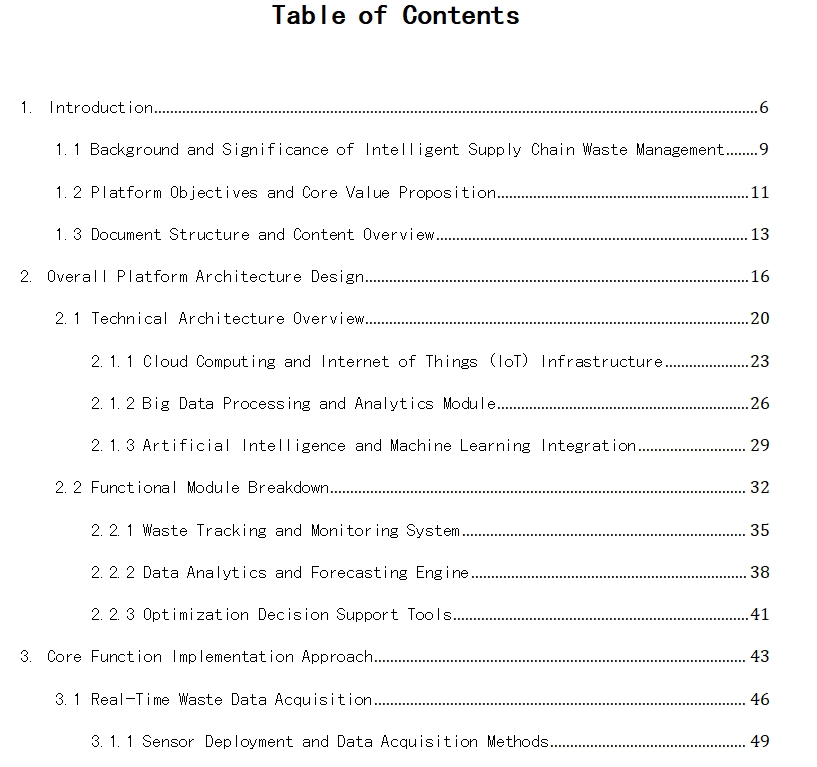
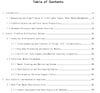
1. Introduction 6
1.1 Background and Significance of Intelligent Supply Chain Waste Management 9
1.2 Platform Objectives and Core Value Proposition 11
1.3 Document Structure and Content Overview 13
2. Overall Platform Architecture Design 16
2.1 Technical Architecture Overview 20
2.1.1 Cloud Computing and Internet of Things (IoT) Infrastructure 23
2.1.2 Big Data Processing and Analytics Module 26
2.1.3 Artificial Intelligence and Machine Learning Integration 29
2.2 Functional Module Breakdown 32
2.2.1 Waste Tracking and Monitoring System 35
2.2.2 Data Analytics and Forecasting Engine 38
2.2.3 Optimization Decision Support Tools 41
3. Core Function Implementation Approach 43
3.1 Real-Time Waste Data Acquisition 46
3.1.1 Sensor Deployment and Data Acquisition Methods 49
3.1.2 Data Standardization and Cleansing Process 51
3.2 Waste Classification and Recognition Technology 53
3.2.1 Image Recognition and AI Classification Algorithms 55
3.2.2 RFID and Barcode Application Scheme 57
3.3 End-to-End Supply Chain Visual Monitoring 60
3.3.1 Dashboard Design and User Interface 63
3.3.2 Real-Time Alerts and Exception Handling Mechanism 66
4. Data Analytics and Intelligent Decision-Making 69
4.1 Waste Generation Pattern Analysis 71
4.1.1 Trend Forecasting and Seasonal Fluctuation Identification 74
4.1.2 Identification of Key Influencing Factors 76
4.2 Optimization Models and Algorithm Applications 80
4.2.1 Transport Route and Scheduling Optimization 83
4.2.2 Treatment Facility Resource Allocation Algorithm 86
4.3 Sustainability Indicator Calculation 89
4.3.1 Carbon Footprint and Environmental Impact Assessment 92
4.3.2 Resource Recovery Rate and Economic Benefit Analysis 95
5. Platform Implementation and Deployment Strategy 97
5.1 Hardware and Software Requirements Planning 100
5.1.1 Server, Sensor, and Network Equipment List 103
5.1.2 Software Platform Selection and Custom Development Plan 106
5.2 Phased Rollout Roadmap 108
5.2.1 Pilot Project Selection and Implementation Steps 112
5.2.2 Full Deployment and Scaled Expansion Plan 115
5.3 System Integration and API Design 118
5.3.1 Integration Approach with Existing ERP/WMS Systems 121
5.3.2 Third-Party Service Integration (Logistics, Recyclers) 124
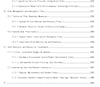
6. Data Security and Compliance Management 126
6.1 Data Privacy Protection Measures 129
6.1.1 Encryption and Access Control Mechanisms 131
6.1.2 Compliance Auditing and Log Management 133
6.2 Regulatory Conformance Design 136
6.2.1 Adaptation to Domestic and International Waste Management Regulations 139
6.2.2 Environmental Standards and Certification Support (e.g., ISO 14001) 142
7. User Roles and Permission Management 145
7.1 Multi-Level User System Design 149
7.1.1 Permission Division Among Administrators, Operators, and Viewers 153
7.1.2 Supply Chain Partner Access Control 156
7.2 Training and Support System 159
7.2.1 User Manuals and Training Materials 161
7.2.2 Online Help and Technical Support Channels 164
8. Performance Evaluation and Continuous Improvement 166
8.1 Key Performance Indicator (KPI) System 169
8.1.1 Waste Reduction Rate and Recovery Efficiency Indicators 173
8.1.2 Cost Savings and ROI Calculation Model 177
8.2 Feedback Mechanism and Iterative Optimization 181
8.2.1 User Feedback Collection and Analysis 185
8.2.2 System Upgrade and Function Enhancement Plan 187
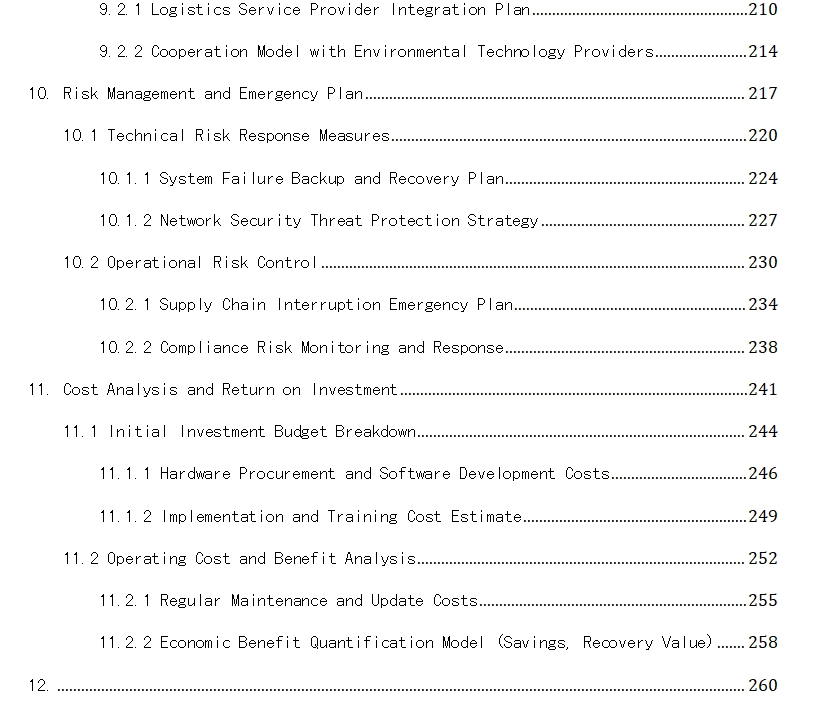
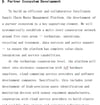
9. Partner Ecosystem Development 192
9.1 Supplier and Recycler Integration Strategy 196
9.1.1 Partner Access Criteria and Management Process 200
9.1.2 Data Sharing and Collaboration Mechanism 203
9.2 Third-Party Service Integration Expansion 206
9.2.1 Logistics Service Provider Integration Plan 210
9.2.2 Cooperation Model with Environmental Technology Providers 214
10. Risk Management and Emergency Plan 217
10.1 Technical Risk Response Measures 220
10.1.1 System Failure Backup and Recovery Plan 224
10.1.2 Network Security Threat Protection Strategy 227
10.2 Operational Risk Control 230
10.2.1 Supply Chain Interruption Emergency Plan 234
10.2.2 Compliance Risk Monitoring and Response 238
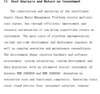
11. Cost Analysis and Return on Investment 241
11.1 Initial Investment Budget Breakdown 244
11.1.1 Hardware Procurement and Software Development Costs 246
11.1.2 Implementation and Training Cost Estimate 249
11.2 Operating Cost and Benefit Analysis 252
11.2.1 Regular Maintenance and Update Costs 255
11.2.2 Economic Benefit Quantification Model (Savings, Recovery Value) 258
12. 260